
Now Reading: Standard Chartered Forecasts Stablecoin Growth to Fuel $1 Trillion in New T-Bill Demand by 2028
-
01
Standard Chartered Forecasts Stablecoin Growth to Fuel $1 Trillion in New T-Bill Demand by 2028

Standard Chartered Forecasts Stablecoin Growth to Fuel $1 Trillion in New T-Bill Demand by 2028

The post Standard Chartered Forecasts Stablecoin Growth to Fuel $1 Trillion in New T-Bill Demand by 2028 appeared first on Coinpedia Fintech News
According to new research from Standard Chartered, the companies behind stablecoins are on track to become some of the biggest buyers of U.S. Treasury bills. Standard Chartered suggests that the U.S. government might start selling more short-term debt to keep up with this new demand. To make room for all those extra T-bills, the Treasury could even hit the “pause” button on its 30-year bond auctions for a few years.
Stablecoin Market Cap Could Hit $2 Trillion By 2028
Standard Chartered analysts Geoffrey Kendrick and John Davies expect the stablecoin market to explode to $2 trillion by the end of 2028. As this market grows, companies like Tether and Circle will need to buy massive amounts of “safe” assets to back them up.
This surge is turning stablecoin issuers into some of the biggest customers for U.S. government debt. The analysts predict that these companies will likely buy between $800 billion to $1 trillion in short-term Treasury bills (T-bills) to use as reserves.
Also read: Crypto Bloodbath Today: Why Altcoins, Bitcoin Collapsed and What Comes Next
If the government keeps selling debt the way it does now, there won’t be enough T-bills to go around. As a result, demand could outpace supply by about $900 billion over the next three years.
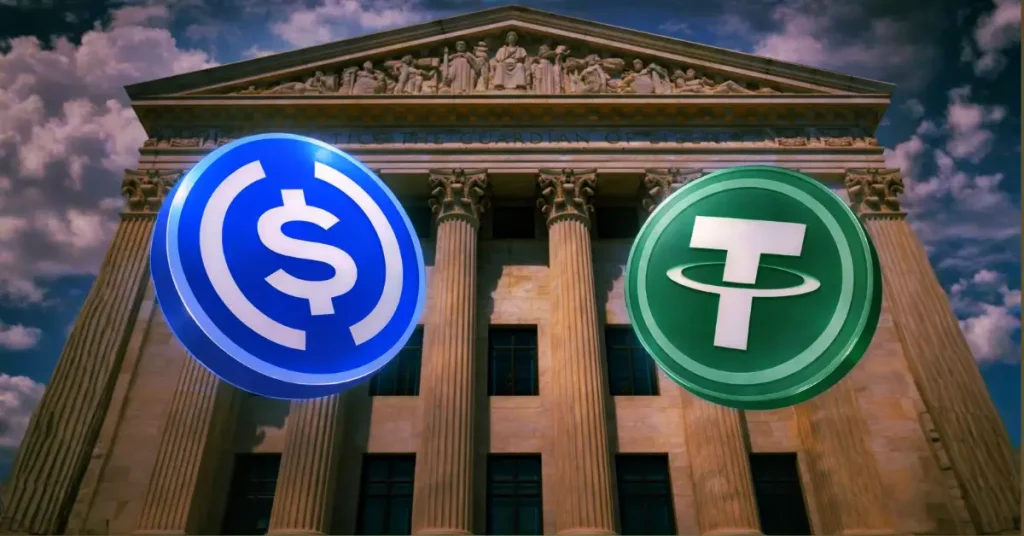
As of now, the stablecoin market has grown to an estimated $300–$320 billion in total value. Companies like Tether and Circle (CRCL) have become significant investors in short-term U.S. government debt. To back tokens like USDT and USDC, they hold large reserves, much of which is invested in Treasury bills.
Tether has reported Treasury bill holdings comparable to those of some mid-sized countries, highlighting the scale of its reserves. Circle likewise maintains a substantial portion of its backing assets in short-term Treasuries, often through money market funds designed to hold highly liquid government securities.